
Financial readiness for a first-time Sarasota homebuyer is the process of aligning your income, debts, and savings with the specific costs of Gulf Coast living before you make an offer. Carolyn Yates, a Sarasota real estate agent, emphasizes that buyers must understand their total monthly obligations, not just the mortgage payment. This guide focuses strictly on the financial assessment required to buy a home in this market.
Understanding Your True Monthly Budget
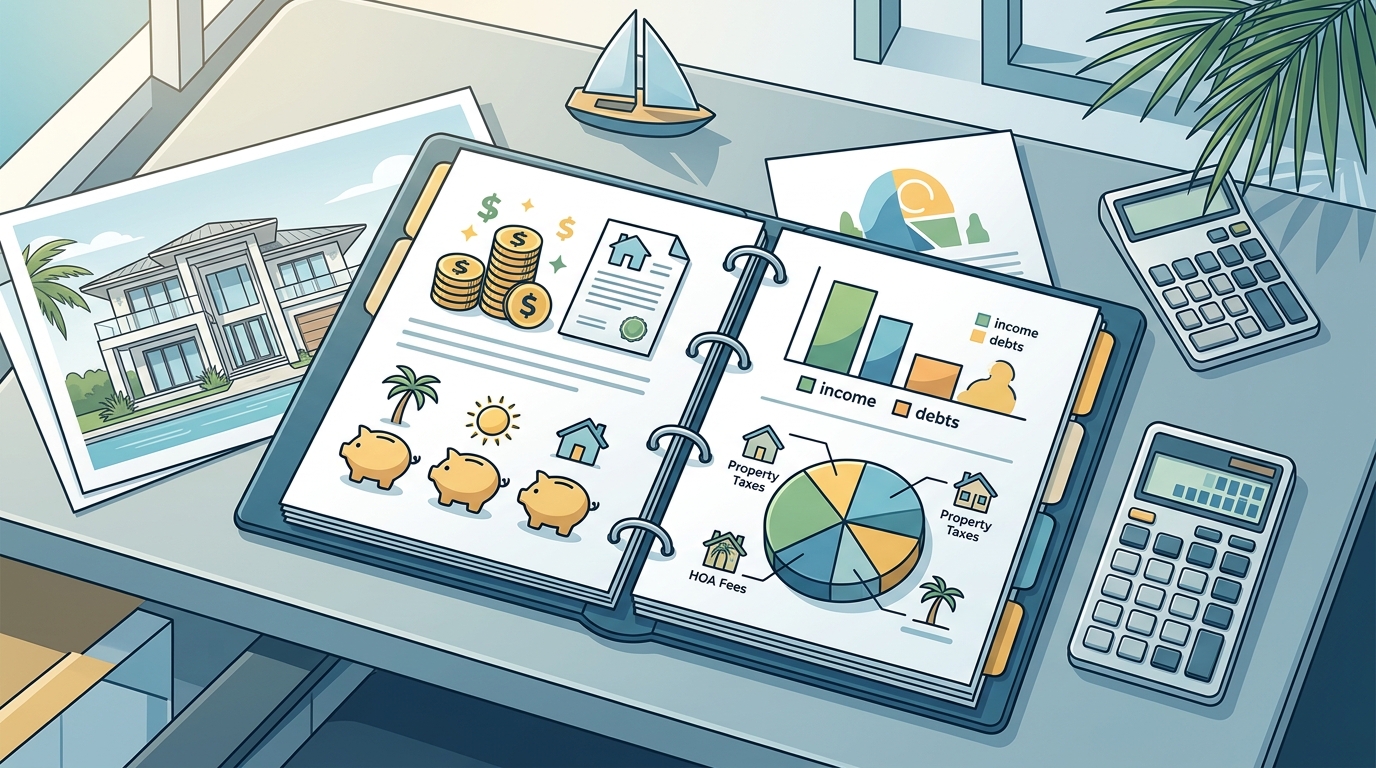
Many buyers focus only on the principal and interest of a mortgage. This is a dangerous oversight in Sarasota. Your true budget must include property taxes, homeowners insurance, and association fees. In Sarasota, insurance costs can be significantly higher than the national average due to hurricane risk. You must calculate these recurring costs to ensure your monthly outlay is sustainable.
Carolyn Yates advises clients to build a budget that accounts for the full cost of ownership. This includes utilities, which can be high in Florida due to constant air conditioning use. By itemizing these expenses, you avoid the shock of a monthly payment that exceeds your cash flow. This precision is critical when competing in a market where well-priced homes receive multiple offers.
Credit Scores and Debt-to-Income Ratios
Your credit score is the primary driver of your interest rate. A higher score can save you tens of thousands of dollars over the life of the loan. Lenders also look at your debt-to-income ratio, or DTI. This metric compares your monthly debt payments to your gross monthly income. Most conventional lenders prefer a DTI below 43 percent. If you have high credit card balances or car loans, you may need to pay them down before applying for a mortgage.
Sarasota Specific Financial Considerations
Property taxes in Sarasota County are also a key factor. The assessed value of your home determines your tax bill. Understanding the local tax structure helps you predict your long-term costs. Carolyn Yates helps buyers analyze these local variables. This ensures that the price you pay aligns with the total cost of ownership in this specific region.
Down Payment Strategies and Assistance
Many first-time buyers believe they need 20 percent down to buy a home. This is not always true. Various loan programs allow for lower down payments, sometimes as low as 3 percent. However, a smaller down payment often requires private mortgage insurance, or PMI. This adds to your monthly cost. You must weigh the benefit of keeping cash reserves against the cost of PMI.
Florida offers several down payment assistance programs for first-time buyers. These programs can provide grants or low-interest loans to help with closing costs and down payments. Eligibility often depends on income limits and home price caps. Researching these options can make homeownership more accessible. Carolyn Yates can guide you through the available resources to maximize your purchasing power.
Closing Costs and Cash Reserves
Closing costs are the fees paid at the end of the transaction. These include lender fees, title insurance, and recording fees. In Sarasota, these costs can range from 2 to 5 percent of the loan amount. You need to have this cash available at closing. Lenders also require you to have cash reserves after closing. This is typically two to six months of mortgage payments. Having these reserves shows lenders that you are a low-risk borrower.
Planning for closing costs early prevents last-minute delays. You should start saving for these expenses as soon as you decide to buy. Carolyn Yates helps clients create a timeline for saving. This ensures that you have the necessary funds ready when you are prepared to make an offer.
Key Takeaways
- Calculate your total monthly cost, including taxes, insurance, and association fees.
- Keep your debt-to-income ratio below 43 percent to qualify for conventional loans.
- Review condo association documents for special assessments and reserve funds.
- Explore Florida down payment assistance programs to reduce upfront costs.
- Save for closing costs and maintain cash reserves after the purchase.
- Work with a local agent who understands Sarasota specific financial risks.
Frequently Asked Questions
How much should I save for a down payment in Sarasota?
It depends on the loan program. Conventional loans may require 3 to 20 percent. FHA loans can require as little as 3.5 percent. You should also save for closing costs, which are separate from the down payment.
What is a good debt-to-income ratio for a mortgage?
A DTI below 43 percent is generally preferred by lenders. A lower ratio, such as 36 percent, can help you qualify for better interest rates and more loan options.
Do I need to pay PMI if I put down less than 20 percent?
Yes, most conventional loans require PMI if your down payment is less than 20 percent. This insurance protects the lender, not you, and adds to your monthly payment.
How do condo association fees affect my budget?
Association fees cover maintenance and amenities. You must include these in your monthly budget. You should also check for special assessments, which are one-time charges for major repairs.
Can I use retirement funds for a down payment?
Yes, you can often use retirement funds for a down payment. However, there may be tax implications or penalties for early withdrawal. Consult a financial advisor before using these funds.
Why is insurance more expensive in Sarasota?
Sarasota is in a hurricane-prone area. This increases the risk for insurers, leading to higher premiums. You should shop around for quotes and consider wind mitigation features to lower costs.
Next Steps for Financial Preparation
Getting financially ready for Sarasota real estate requires a detailed look at your income, debts, and local costs. By understanding the full picture, you can make a confident and competitive offer. Carolyn Yates provides expert guidance to help you navigate these financial steps. To begin your financial assessment, contact Carolyn Yates for a personalized consultation.