
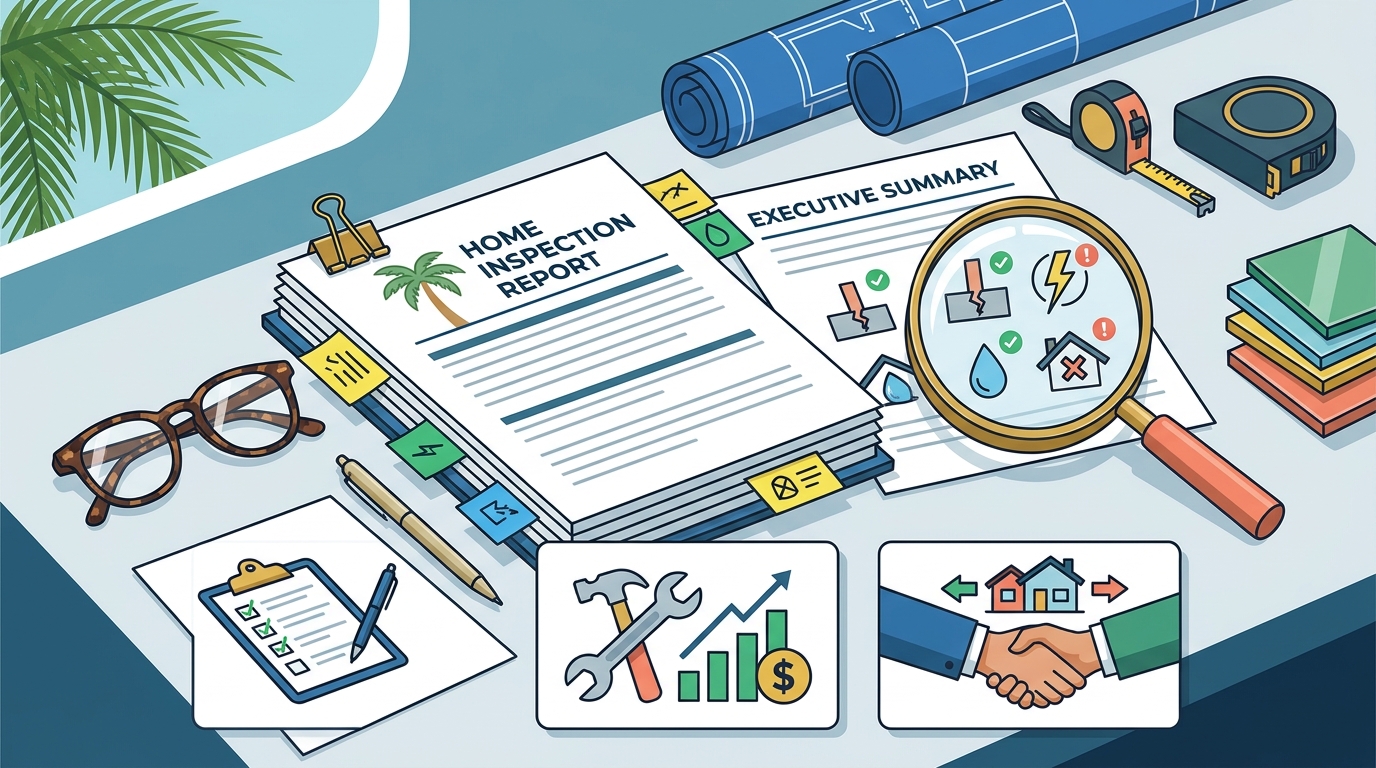
Receiving a home inspection report in Florida can feel overwhelming, but it is a critical step in protecting your investment. You should first read the executive summary to identify major safety or structural issues, then review the detailed findings to understand the scope of repairs. Next, consult with a licensed contractor to get accurate cost estimates for any recommended fixes. Finally, use this data to negotiate repairs or price adjustments with the seller. Carolyn Yates, a Sarasota real estate agent, emphasizes that understanding this document is essential for making informed decisions in the Gulf Coast market.
Understanding the Report Structure
Most Florida home inspection reports follow a standardized format designed to be thorough yet readable. The document typically begins with a scope of work, which outlines what was and was not inspected. This section is vital because it sets the boundaries of the inspector's liability and expertise. For example, a standard residential inspection will cover the roof, foundation, and major systems, but it will not include a pest inspection or a septic system evaluation unless specifically requested. For additional details, review the Sarasota FL Pre Listing.
Following the scope, you will find the executive summary. This section highlights the most significant findings, often categorized by severity. It is the fastest way to grasp the overall condition of the property. If you see red flags here, such as active water intrusion or electrical hazards, you know the home requires immediate attention. Understanding this hierarchy helps you prioritize your review process and manage your time effectively.
Decoding Common Findings
Inspection reports use specific terminology to describe the condition of various components. It is important to distinguish between safety hazards, functional defects, and cosmetic issues. A safety hazard is a condition that poses an immediate risk to the health or safety of occupants. For instance, exposed live wires or a cracked foundation are safety hazards that must be addressed before closing. These issues are non-negotiable and often require immediate remediation.
Functional defects are problems that affect the operation of a system but do not pose an immediate safety risk. An example might be a window that sticks or a door that does not latch properly. While these issues are annoying, they are often minor and inexpensive to fix. Cosmetic issues, such as peeling paint or worn carpet, are generally not covered in detail by inspectors but may be noted. Knowing the difference between these categories helps you avoid overreacting to minor issues while ensuring you do not ignore serious ones.
The Role of Contractors in Validation
One of the most common mistakes buyers make is assuming the inspector's recommendations are final. Inspectors are not licensed to perform repairs, so their advice is based on observation, not engineering. To get a true picture of the cost and complexity of repairs, you should hire a licensed contractor to validate the findings. This step is crucial because it provides you with a realistic budget for negotiations.
For example, if the report notes a roof leak, the inspector might recommend a full replacement. However, a roofing contractor might determine that only a section of the shingles needs repair. This distinction can save you thousands of dollars. Carolyn Yates often advises her clients to use the inspection report as a starting point for these conversations. By bringing in a second opinion, you gain the leverage needed to negotiate effectively with the seller.
Negotiation Strategies in Florida
In Florida, the home inspection contingency is a powerful tool for buyers. Once you have your report and contractor estimates, you can present your findings to the seller. You have several options: request that the seller make the repairs, ask for a credit at closing to cover the costs, or negotiate a lower purchase price. The best strategy depends on the nature of the issues and the seller's willingness to cooperate.
For major structural or safety issues, requesting repairs is often the best approach. For minor functional defects, a credit might be more practical. It is important to present your case clearly and professionally. Providing the inspection report and contractor estimates side by side makes your request concrete and difficult to dismiss. This approach demonstrates that you are serious about the purchase but also aware of the property's true condition.
When to Walk Away
While most inspection issues can be negotiated, some findings may indicate that a property is not a sound investment. If the report reveals extensive water damage, significant foundation problems, or outdated electrical systems that require a full rewire, the cost of repairs may exceed the home's value. In these cases, it may be wise to walk away from the deal. This decision is not a failure; it is a prudent financial move.
Carolyn Yates reminds her clients that the inspection contingency exists to protect them. If the numbers do not make sense, or if the seller is unwilling to address critical safety issues, there are other homes on the market. Walking away allows you to preserve your capital and avoid a property that will become a financial burden. Trusting your instincts and the data in the report is key to long-term satisfaction with your purchase.
Key Takeaways
- Read the executive summary first to identify major safety and structural issues.
- Distinguish between safety hazards, functional defects, and cosmetic issues.
- Hire a licensed contractor to validate the inspector's findings and get accurate cost estimates.
- Use the report and contractor estimates to negotiate repairs, credits, or price reductions.
- Be prepared to walk away if the cost of repairs exceeds the property's value.
- Consult with a local real estate agent to navigate the negotiation process effectively.
Frequently Asked Questions
How long do I have to review the inspection report?
The timeframe for reviewing the inspection report is typically defined in your purchase contract. In Florida, this period is often 10 to 15 days after the inspection is completed. It is important to review the report and submit any requests for repairs or credits within this window to maintain your rights under the contract.
Can I negotiate the price based on the inspection report?
Yes, you can negotiate the price based on the inspection report. If the report reveals significant issues, you can request a price reduction that reflects the cost of repairs. This is a common practice in the Florida real estate market and is supported by the inspection contingency in your contract.
What if the seller refuses to make repairs?
If the seller refuses to make repairs, you can request a credit at closing to cover the costs. If the seller refuses both repairs and a credit, you may choose to proceed with the purchase as-is or terminate the contract and receive your earnest money deposit back, depending on the terms of your agreement.
Do I need a contractor to review the report?
While not legally required, hiring a contractor to review the report is highly recommended. Contractors can provide accurate cost estimates and determine the true scope of repairs. This information is essential for making informed negotiation decisions and protecting your investment.
What is a safety hazard in an inspection report?
A safety hazard is a condition that poses an immediate risk to the health or safety of occupants. Examples include exposed electrical wires, cracked foundations, or active water intrusion. These issues must be addressed before closing and are typically non-negotiable.
How does Carolyn Yates help with inspection reports?
Carolyn Yates helps her clients navigate the inspection process by providing guidance on how to interpret the report and negotiate with sellers. She works with trusted local contractors to validate findings and ensures that her clients make informed decisions about their purchases.
Conclusion
Your home inspection report is a powerful tool that can protect your investment and guide your negotiations. By understanding the report's structure, decoding common findings, and validating issues with licensed contractors, you can make confident decisions about your purchase. Carolyn Yates is available to help you navigate this process in Sarasota and the surrounding Gulf Coast area. To get started, for personalized guidance on your real estate journey.