

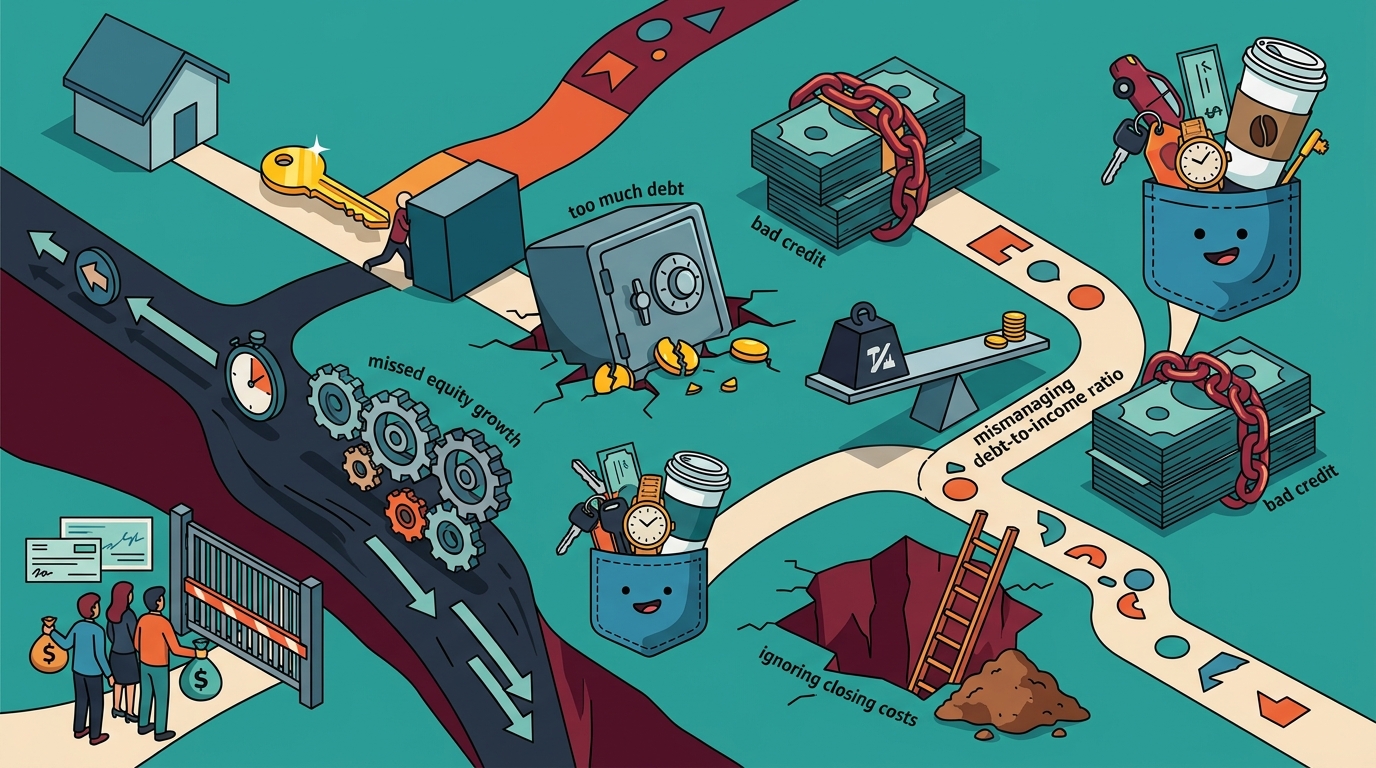
Buying your first home is a monumental milestone, but it is also a financial minefield for the unprepared. According to the National Association of Realtors, the median age of first-time home buyers has been rising, indicating that many wait too long to enter the market due to financial hesitation. This delay often results in missed equity growth opportunities and increased competition from cash buyers. Understanding the specific financial traps that derail prospective homeowners is critical to securing your future. This guide outlines the most common errors and provides the strategic framework to navigate them successfully.
Underestimating the True Cost of Homeownership
Many first-time buyers focus exclusively on the monthly mortgage payment. This narrow view ignores the substantial ancillary costs that accompany property ownership. Closing costs alone typically range from two to five percent of the loan amount. For a median-priced home, this translates to thousands of dollars in upfront fees including appraisal, inspection, and title insurance.
Beyond closing, homeowners must budget for ongoing maintenance. The Federal Reserve reports that homeowners spend an average of three percent of their home's value annually on upkeep. This includes HVAC repairs, roof replacements, and landscaping. Failing to account for these variables can lead to immediate financial strain after moving in.
To avoid this trap, calculate the total cost of ownership. Include property taxes, insurance, utilities, and a maintenance reserve. Homeownership is an investment, not just a place to live. Consult with a local expert to understand regional cost variations. You can explore our comprehensive first-time buyer resources to get a clearer picture of local market dynamics.
Ignoring the Power of Mortgage Pre-Approval
Shopping for a home without a pre-approval letter is a strategic error. Sellers take offers from pre-approved buyers much more seriously. It signals that you have the financial capacity to close the deal. Without this documentation, your offer may be ignored in competitive markets.
Pre-approval also clarifies your budget. It prevents you from falling in love with a property that is financially out of reach. This process involves a hard credit inquiry and a thorough review of your financial history. Lenders verify your income, assets, and debt-to-income ratio during this stage.
Start this process early. Get pre-approved before you begin viewing homes. This gives you a clear price range and strengthens your negotiating position. For personalized advice on mortgage options, visit our mortgage advisory services page to connect with qualified professionals.
Depleting Emergency Funds for the Down Payment
Using every dollar of your savings for the down payment is a dangerous strategy. Life events such as job loss, medical emergencies, or urgent home repairs can occur shortly after closing. Without a financial buffer, you may be forced to take on high-interest debt or sell the property at a loss.
Financial experts recommend keeping at least three to six months of living expenses in a liquid account. This includes your new mortgage payment, utilities, and insurance. This reserve acts as a shock absorber for unexpected financial hits. It provides peace of mind and stability during the transition to homeownership.
Consider down payment assistance programs that allow you to preserve cash reserves. These programs can provide grants or low-interest loans for closing costs. This strategy helps you maintain liquidity while still achieving homeownership. Learn more about down payment assistance options available in your area.
Making Large Purchases Before Closing
Any significant change to your financial profile during the loan process can jeopardize your approval. Buying a new car, furniture on credit, or large electronics can alter your debt-to-income ratio. Lenders monitor your credit report and bank statements until the day of closing.
A sudden increase in debt can lead to a denial of your mortgage. Even if the denial happens at the last minute, the delay can cost you your contract deposit. Sellers may walk away from the deal if your financing falls through. This scenario is costly and stressful for all parties involved.
Freeze your credit and avoid any new financial commitments. Pay off small debts to improve your debt-to-income ratio if possible. Do not open new credit cards or apply for loans. Stay in close contact with your loan officer to report any changes. Our team provides expert tips for a smooth closing process to help you stay on track.
Choosing the Wrong Loan Type or Term
The mortgage market offers various products, each with distinct advantages and risks. Choosing a loan that does not align with your long-term goals can lead to financial regret. For example, an adjustable-rate mortgage (ARM) might offer lower initial rates but carries the risk of payment shock later.
Fixed-rate mortgages provide stability and predictable payments. They are ideal for buyers who plan to stay in the home for many years. ARMs may be suitable for those who plan to sell or refinance within a few years. Understanding the terms is crucial for making an informed decision.
Compare multiple loan estimates from different lenders. Look beyond the interest rate to include points, fees, and closing costs. A slightly higher rate with lower fees might be more cost-effective over time. We offer loan comparison tools to help you find the best fit for your financial situation.
Working Without Professional Guidance
Navigating the real estate market alone is risky. Real estate transactions involve complex contracts, disclosures, and negotiations. A skilled agent can identify potential issues and advocate for your interests. They also have access to off-market listings and early opportunities.
Agents provide market data that helps you make competitive offers. They can advise on pricing strategies and inspection contingencies. Their expertise can save you money and prevent costly mistakes. The value of professional guidance often exceeds their commission.
Choose an agent who specializes in first-time buyers. Look for someone with local market knowledge and strong communication skills. Carolyn on the Coast offers dedicated support for new buyers. Visit our about page to learn more about our commitment to client success.
Key Takeaways
- Calculate Total Costs: Include closing costs, maintenance, and taxes in your budget, not just the mortgage payment.
- Get Pre-Approved Early: Strengthen your offer and clarify your budget by securing pre-approval before house hunting.
- Preserve Cash Reserves: Keep three to six months of expenses saved to handle unexpected financial emergencies.
- Avoid New Debt: Do not make large purchases or open new credit lines during the loan process.
- Choose the Right Loan: Compare fixed and adjustable-rate mortgages based on your long-term plans.
- Hire an Expert: Work with a local agent who understands the nuances of the first-time buyer market.
- Use Assistance Programs: Explore down payment grants and low-interest loans to reduce upfront costs.
Frequently Asked Questions
How much money do I need to buy my first home?
You typically need a down payment ranging from three to twenty percent of the purchase price. Additionally, budget for closing costs which are two to five percent of the loan amount. Emergency savings should remain separate from these funds.
Can I buy a house with student loan debt?
Yes, you can buy a house with student loan debt. Lenders include your monthly student loan payments in your debt-to-income ratio calculation. However, high debt levels may reduce the amount you can borrow.
What is the difference between pre-qualification and pre-approval?
Pre-qualification is a casual estimate based on self-reported information. Pre-approval is a formal commitment from a lender after verifying your financial documents. Pre-approval is much stronger in competitive markets.
Should I pay off all my debt before buying a house?
Paying off high-interest debt is advisable to improve your debt-to-income ratio. However, do not deplete your savings to do so. Maintain enough cash for the down payment and closing costs.
How long does the home buying process take?
The process typically takes thirty to forty-five days from offer acceptance to closing. This timeline includes mortgage underwriting, home inspections, and appraisals. Delays can occur if issues arise during these steps.
What is a home inspection and why is it important?
A home inspection is a professional evaluation of the property's condition. It identifies potential repairs and safety issues. This contingency allows you to negotiate repairs or withdraw from the contract if major problems are found.
Can I get a mortgage with a low credit score?
Yes, FHA loans allow borrowers with credit scores as low as five hundred eighty. Conventional loans typically require higher scores. Improving your credit score can help you secure better interest rates.
Start Your Home Buying Journey Today
Avoiding financial mistakes is the first step toward successful homeownership. With careful planning and professional guidance, you can navigate the market with confidence. Carolyn on the Coast is here to support you every step of the way. Contact us today to schedule a consultation and begin your journey to your new home. Visit our contact page to get started.